HOW TO ADJUST A TELEPOST
UNEVEN FLOORS OR HARD TO CLOSE DOORS?Your home may just need a jack post adjustment.
CAN I ADJUST A TELEPOST MYSELF?
How to Adjust a Telepost
Adjusting a telepost (also known as a jackpost or screw jack) is a critical task.
It’s usually done to level sagging floors, but because you are dealing with the structural load of a house, doing it too fast can crack drywall, jam doors, or cause structural damage.
The golden rule of adjusting a telepost is patience. You are moving a house, and the house needs time to settle and adjust to its new position.

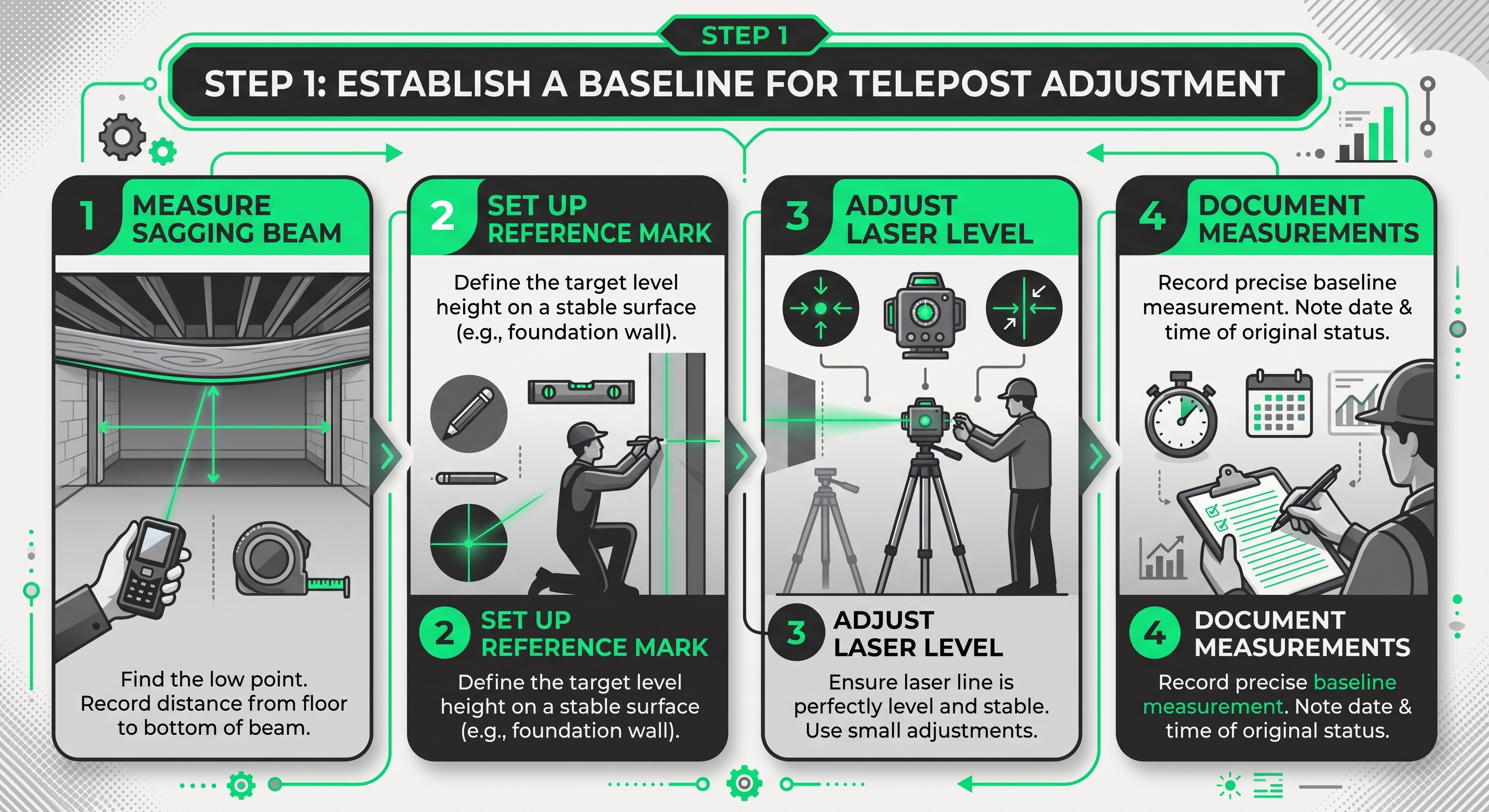
STEP ONE
Establish a Baseline
Before any adjustment begins, you must determine exactly how much the structure needs to move. This step is about precision measurement.
Use a professional self-leveling laser to project a reference line. This established line allows you to measure the exact distance to the sagging beam using a tape measure. Log this baseline measurement. It is your only reference for tracking progress in increments as small as 1/16 of an inch.
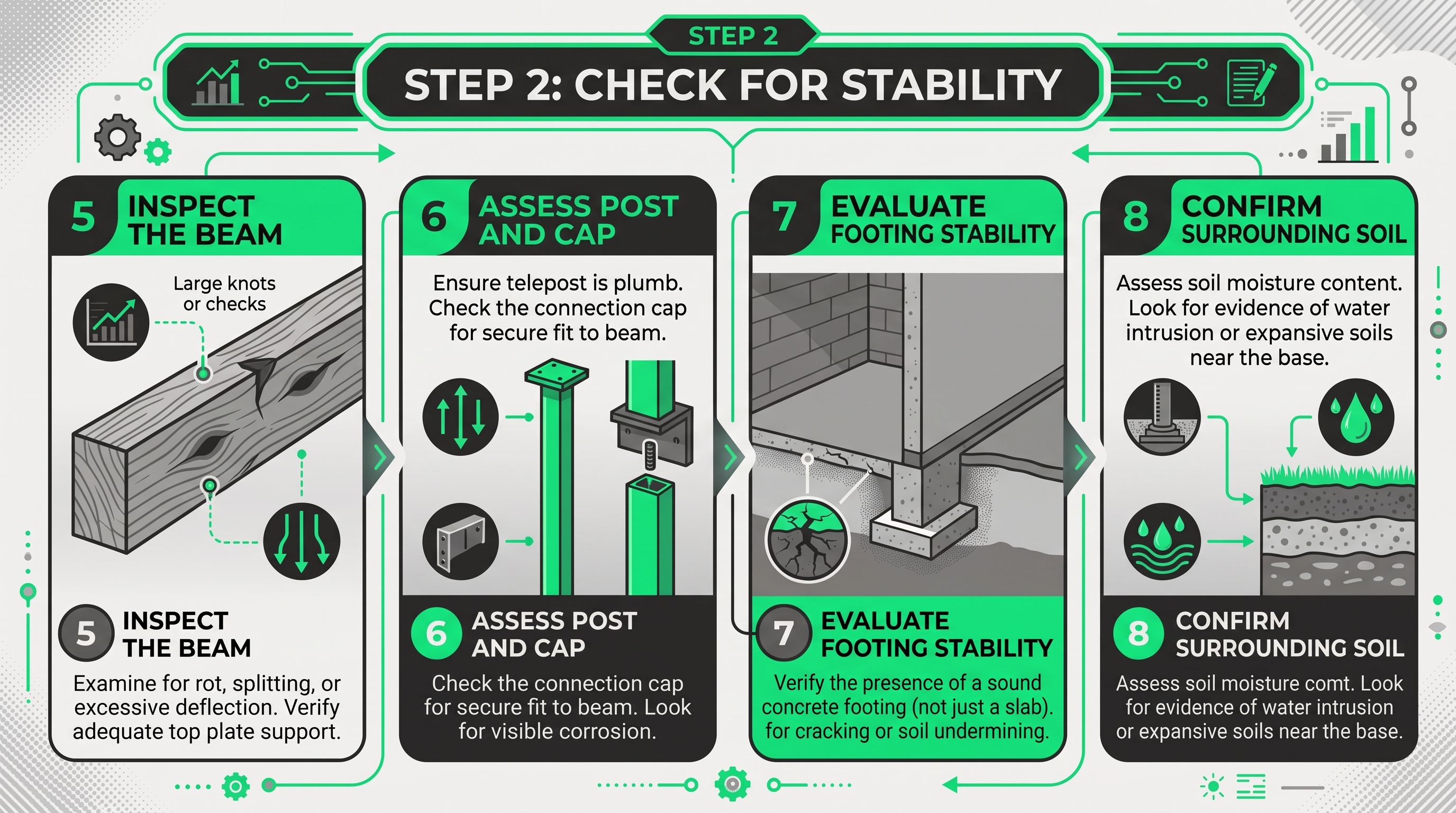
STEP TWO
Check for Stability
Before any adjustment begins, you must determine exactly how much the structure needs to move. This step is about precision measurement.
Use a professional self-leveling laser to project a reference line. This established line allows you to measure the exact distance to the sagging beam using a tape measure. Log this baseline measurement. It is your only reference for tracking progress in increments as small as 1/16 of an inch.
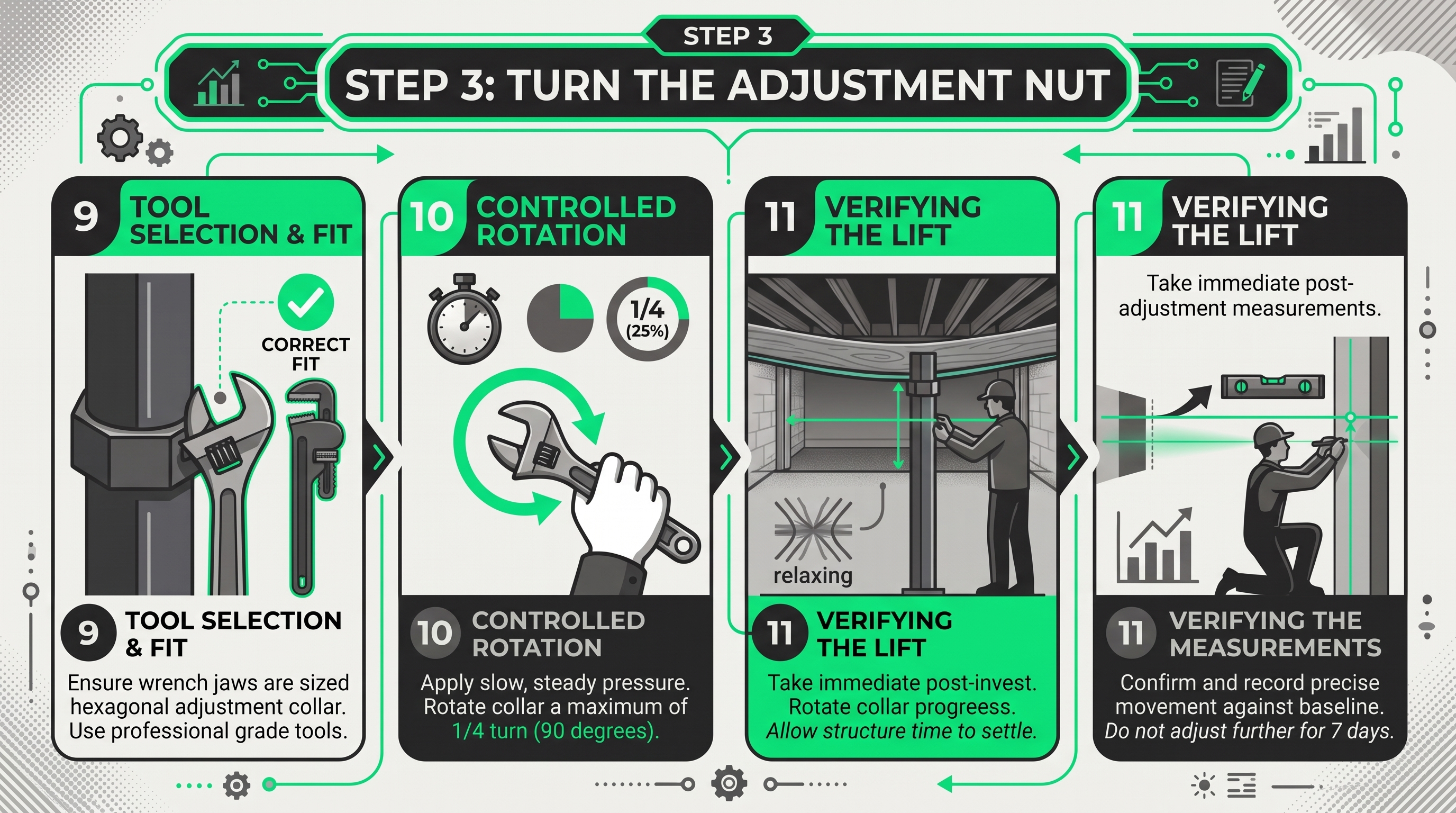
STEP THREE
Turn the Adjustment Nut
Before any adjustment begins, you must determine exactly how much the structure needs to move. This step is about precision measurement.
Use a professional self-leveling laser to project a reference line. This established line allows you to measure the exact distance to the sagging beam using a tape measure. Log this baseline measurement. It is your only reference for tracking progress in increments as small as 1/16 of an inch.
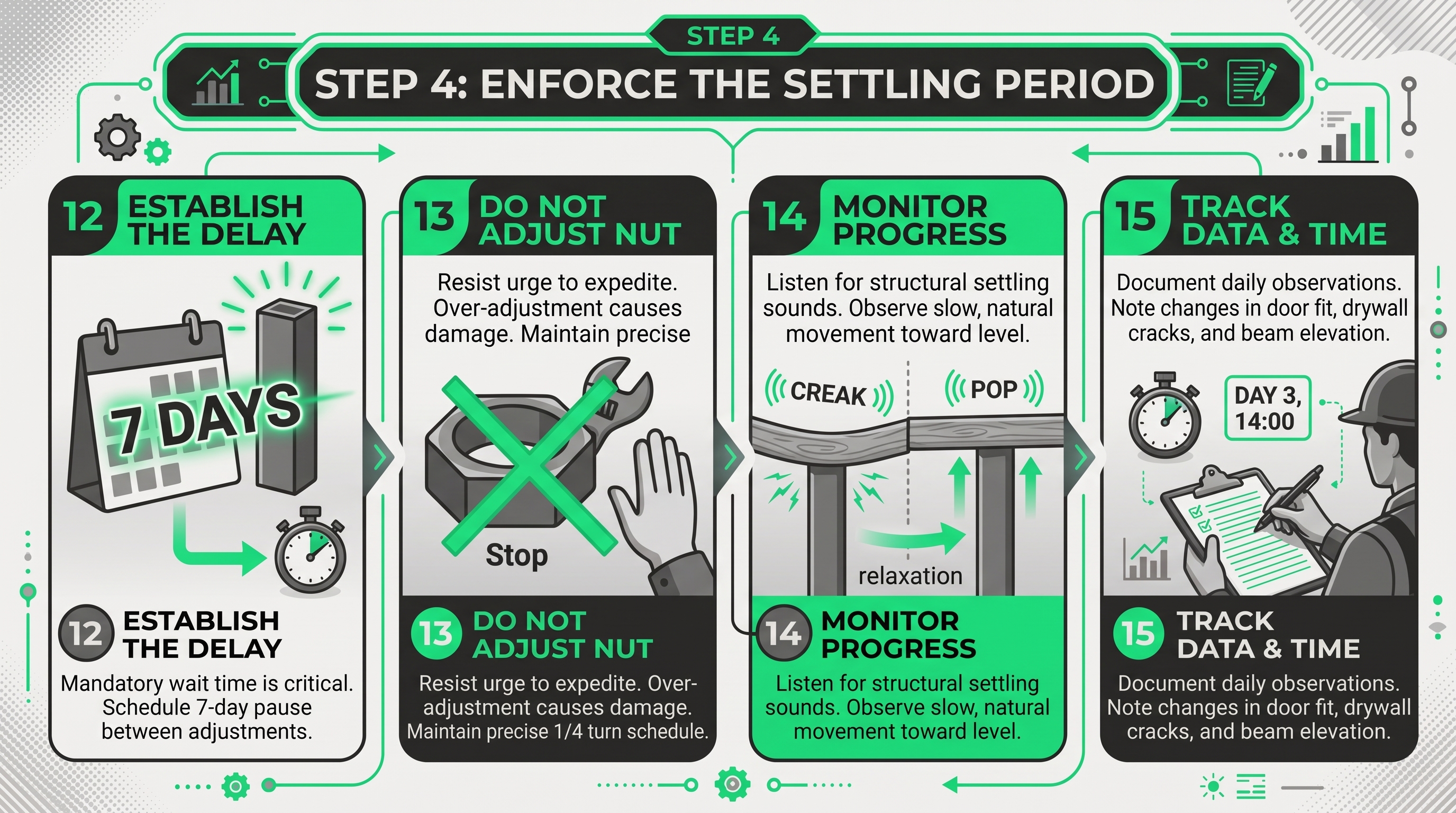
STEP FOUR
Enforce the Settling Period
Before any adjustment begins, you must determine exactly how much the structure needs to move. This step is about precision measurement.
Use a professional self-leveling laser to project a reference line. This established line allows you to measure the exact distance to the sagging beam using a tape measure. Log this baseline measurement. It is your only reference for tracking progress in increments as small as 1/16 of an inch.
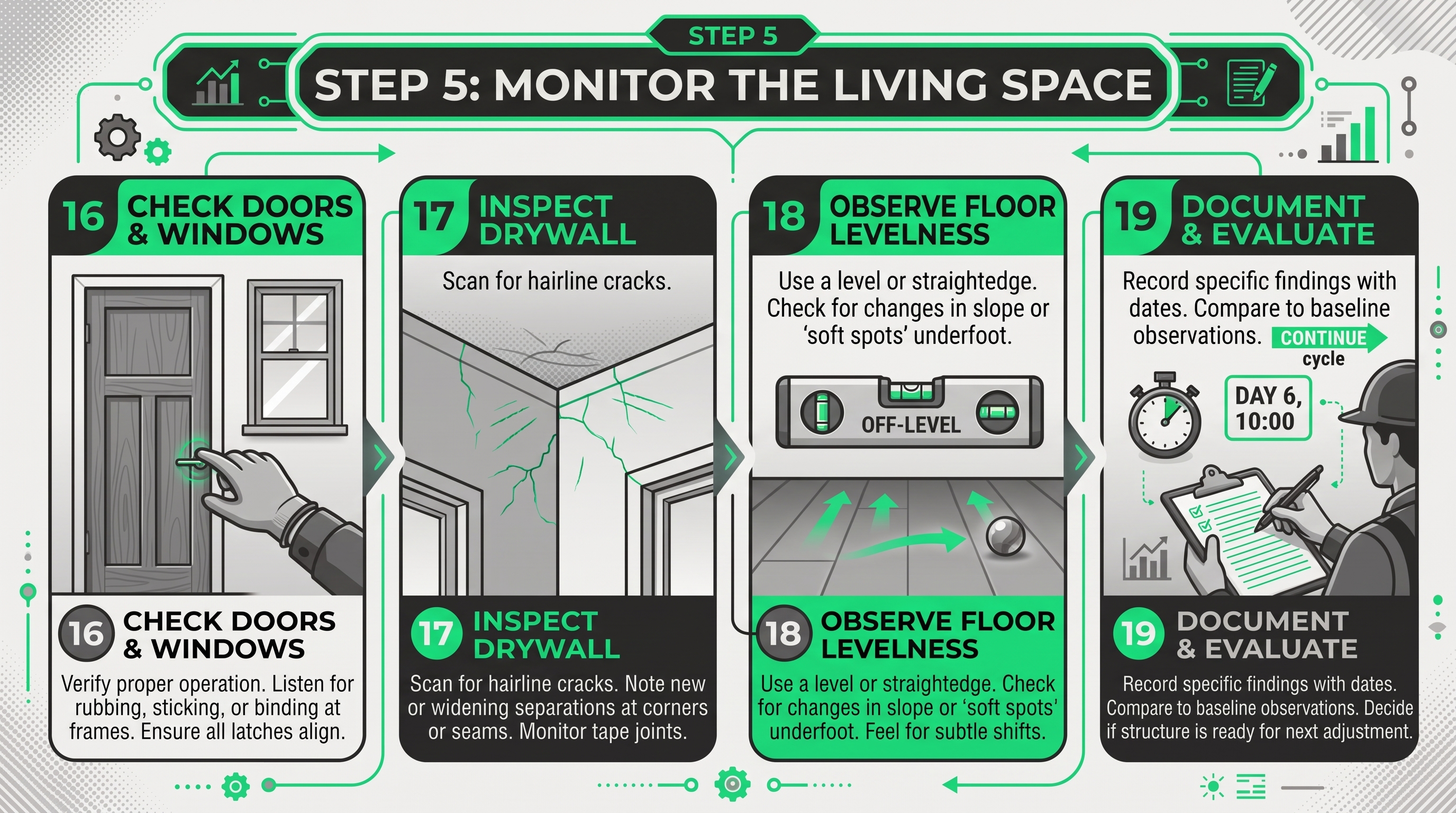
STEP FIVE
Monitor the Living Space
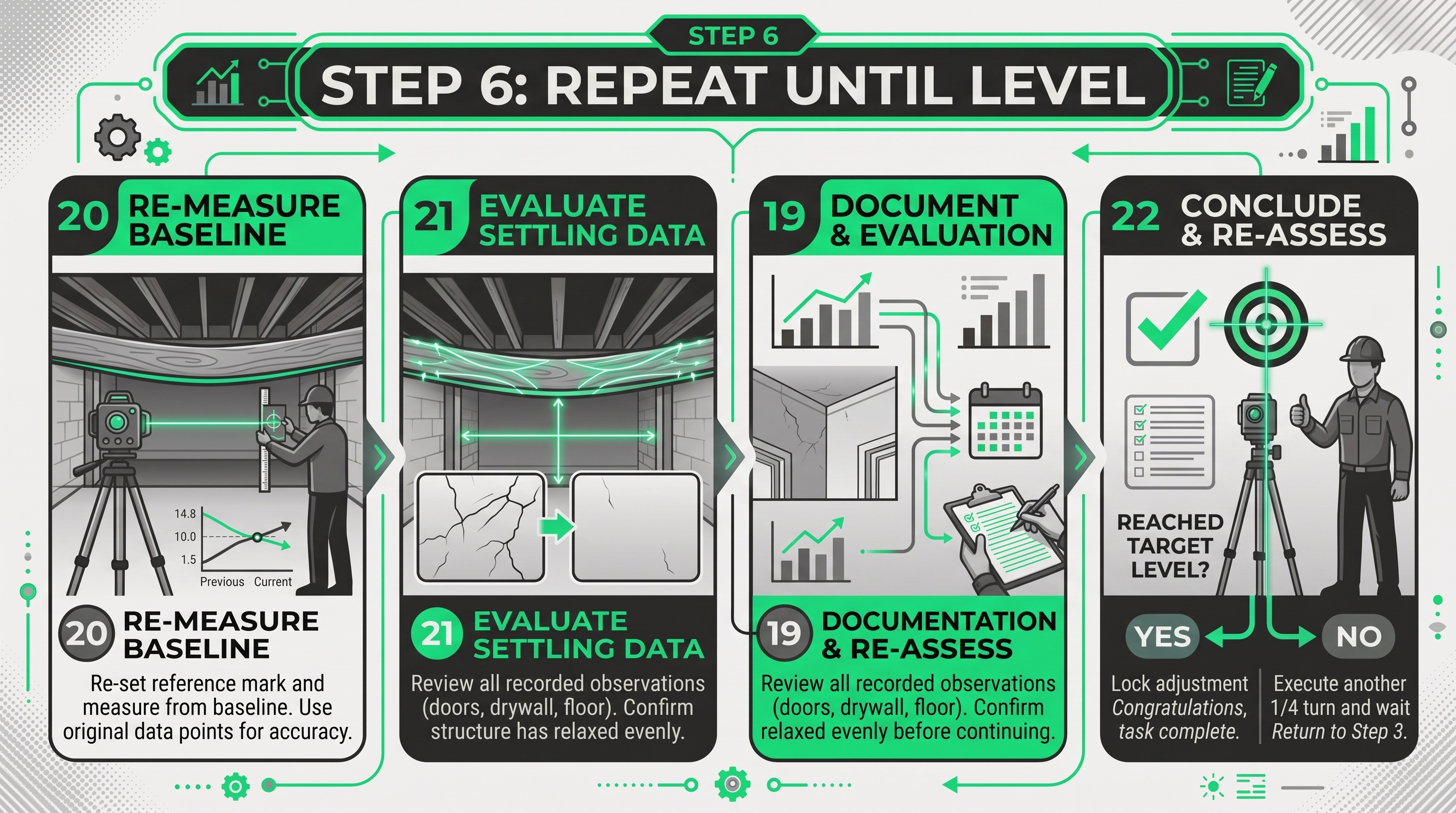
STEP SIX
Repeat Until Level