
Fence Companies in Regina
What type of fence should you build.A Complete Guide for Homeowners
Different Styles of Wood Fences for Every Home
Wood fences remain one of the most popular ways to add privacy, security, curb appeal, and value to a property.
Unlike metal or vinyl fencing, wood offers a natural appearance that can complement nearly any home style. It can be painted, stained, shaped, customized, and repaired without replacing an entire section.
The best wood fence style depends on what you need from the fence. Some homeowners want complete backyard privacy, while others prefer an open design that defines a property line without blocking views. Some styles are traditional and budget-friendly, while others create a modern architectural statement.
Below are the most popular styles of wood fences available today, along with their benefits, drawbacks, and ideal uses.

Privacy Fence
A traditional privacy fence uses tightly spaced vertical boards to create a solid barrier.
Most privacy fences are between six and eight feet tall, although height options depend on local regulations, property conditions, and neighborhood requirements.
Privacy fences are usually built with dog-ear, flat-top, or pointed pickets. Dog-ear boards have the top corners cut at an angle, giving the fence a softer and more finished appearance. Flat-top boards create a clean, simple profile, while pointed pickets provide a more classic or formal look.
This is one of the best wood fence styles for backyards, pools, patios, and properties located close to busy streets. A solid fence helps block views, reduce distractions, and create a more private outdoor living space. It can also help contain children and pets.
The main disadvantage is that a solid fence catches more wind than an open design. It also requires regular staining or sealing because every board is exposed to weather. Still, for homeowners who value privacy above everything else, a traditional privacy fence is hard to beat.
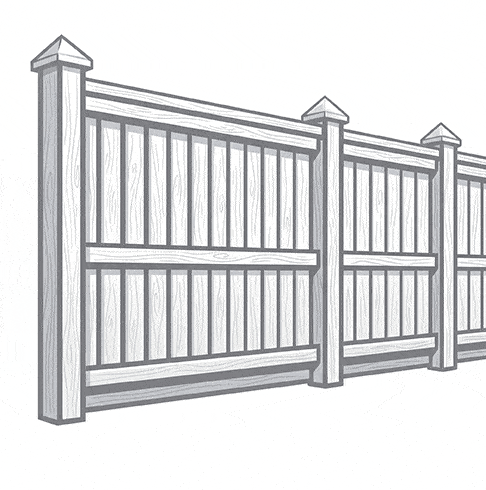
Board-on-Board Fence
A board-on-board fence is a premium privacy design made with overlapping boards.
The pickets are installed on alternating sides of the rails, so one board covers the gap beside another.
The result is a fence with virtually no direct sightlines. Board-on-board fencing also maintains its privacy better as the wood naturally shrinks and expands over time. Small gaps are less noticeable because the boards overlap.
Another advantage is appearance. A board-on-board fence usually looks finished from both sides, making it a strong choice for shared property lines where both homeowners will see the back of the fence.
This style uses more lumber than a basic privacy fence, so it generally costs more. However, many homeowners consider the improved appearance, privacy, and durability worth the additional investment. Board-on-board fencing works particularly well around modern homes, landscaped yards, and high-end outdoor spaces.
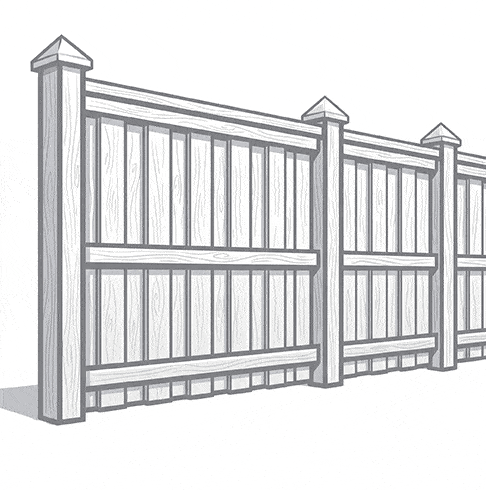
Semi-Private Fence
A semi-private wood fence uses spaced pickets, narrow openings, or alternating patterns to provide some separation without completely blocking visibility.
It is often between four and six feet tall.
This style is useful when homeowners want a boundary around a patio or pool but do not want the yard to feel enclosed. It can also improve airflow and allow more sunlight into gardens.
Semi-private fences are a good compromise between picket and privacy fencing. They offer more visual screening than an open fence while using less material than a solid design. The right amount of spacing depends on the desired privacy level and the angle from which the fence will be viewed.
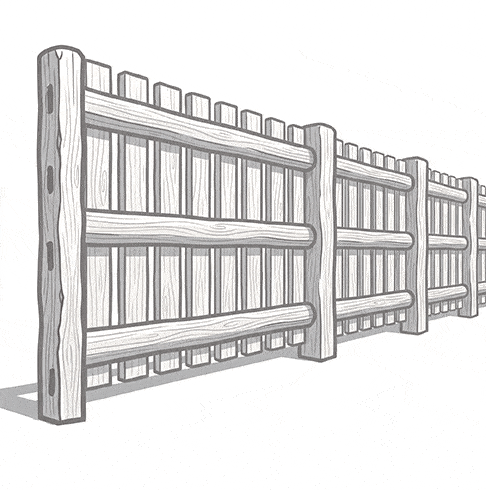
Shadowbox Fence
Shadowbox fencing is similar to board-on-board fencing, but the boards are spaced slightly apart and attached to alternating sides of the rails.
From straight on, the fence appears mostly solid. From an angle, the staggered boards create a distinctive shadow effect.
One of the biggest benefits of a shadowbox fence is that it looks attractive from both sides. There is no obvious “bad side” facing the neighbor. The small gaps also allow some air to pass through, which can reduce wind pressure compared with a completely solid fence.
Shadowbox fences offer strong privacy, but they are not completely private from every angle. Someone standing close to the fence may be able to see through the gaps. This style is best for homeowners who want a balance between privacy, airflow, and visual appeal.
Because the design requires boards on both sides of the rails, shadowbox fencing usually costs more than a standard privacy fence. It is a smart choice for corner lots, shared boundaries, and properties where the fence will be visible from multiple directions.
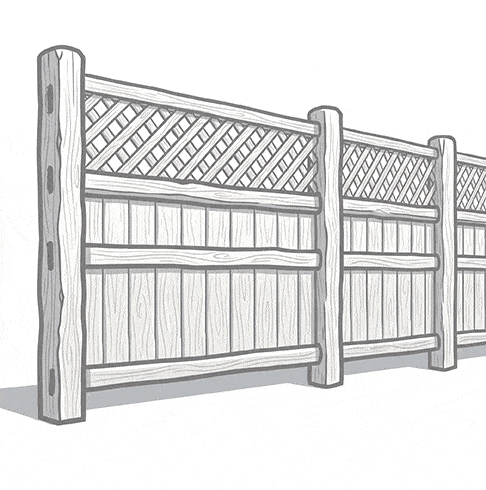
Lattice-Top Fence
A lattice-top fence combines a solid privacy panel with a decorative lattice section along the top. The lower portion blocks views, while the lattice adds detail, light, and airflow.
Lattice can be arranged in a diagonal diamond pattern or a square grid. The top section may be a few inches high or large enough to become a major design feature.
This is one of the most versatile privacy fence styles because it works with traditional, craftsman, cottage, and contemporary homes. It provides privacy without creating the heavy visual appearance of a full-height solid wall.
Lattice-top fences are also popular around patios, gardens, and pools. The open pattern can support vines and flowering plants, although vegetation should be maintained so moisture does not remain trapped against the wood.
Picket Fence
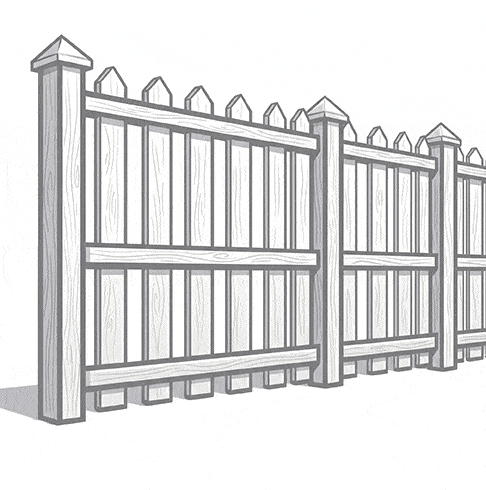
The picket fence is one of the most recognizable wood fence styles. It typically consists of short vertical boards with spaces between them.
Picket fences are often three to four feet tall, making them more decorative than defensive.
Traditional picket fences may use pointed, rounded, square, or scalloped pickets. The spacing can also vary. Narrow spacing provides a stronger boundary, while wider spacing creates a lighter and more open appearance.
Picket fences are ideal for front yards, gardens, walkways, and traditional or cottage-style homes. They add curb appeal without hiding the house or landscaping behind them. They can also help keep children and pets away from the street while maintaining an open view.
The main limitation is privacy. A picket fence will not block neighbors, traffic, or noise. It is also not the best option for security because someone can easily see through it and climb over it. For appearance and property definition, however, few fence styles are more charming.
Horizontal Slat Fence
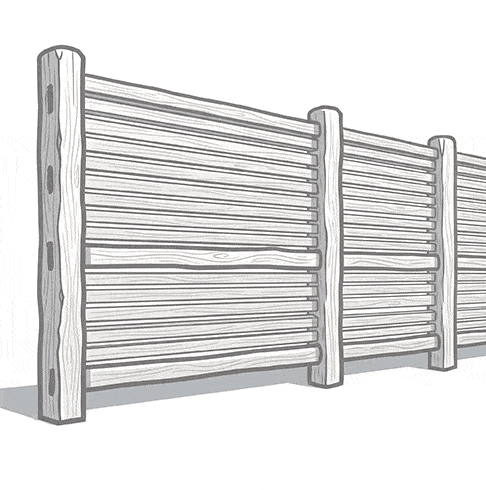
Horizontal wood fencing has become increasingly popular in modern residential design. Instead of vertical pickets, the boards run horizontally between posts.
The boards may be installed tightly together for privacy or with small gaps for a semi-private look. Cedar, redwood, and stained pressure-treated lumber are common choices because the grain becomes an important part of the design.
Horizontal fencing creates clean lines and can make a yard feel wider. It pairs especially well with contemporary homes, minimalist landscaping, concrete, black metal accents, and modern outdoor furniture.
One detail matters: horizontal boards can sag over time if they are too long or poorly supported. A quality installation should use sturdy posts, properly spaced supports, and lumber designed for exterior use. This style can also require more careful maintenance because water may sit on the top edges of the boards.
Post-and-Rail Fence
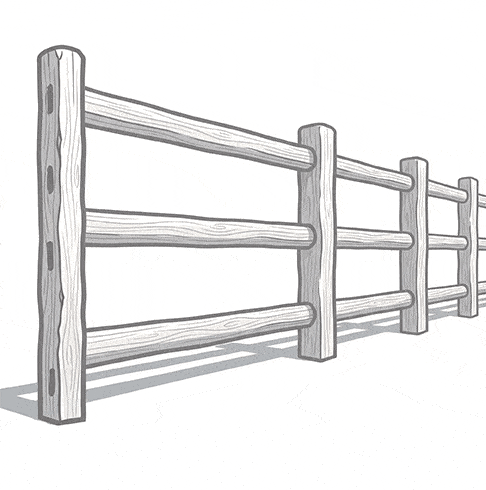
Post-and-rail fencing is an open design that uses evenly spaced posts connected by two or three horizontal rails.
It is similar to split-rail fencing but typically has a more uniform, finished appearance.
This style is a good fit for large yards, driveways, horse properties, and landscapes where the goal is to define space rather than create privacy. It allows views across the property and does not visually overwhelm a home.
Post-and-rail fences can also be customized with wire mesh, decorative caps, or painted rails. Adding mesh makes the fence more functional for pets and livestock while preserving its open appearance.
Award Winning Home Renovation Contractors Regina





Regina Home
Renovation Company
Interior & Exterior Home Renovations
PAYMENT
TYPES


BUILDING MATERIAL SUPPLIER